World of Tarot Blog Series: Major Arcana – The Hierophant
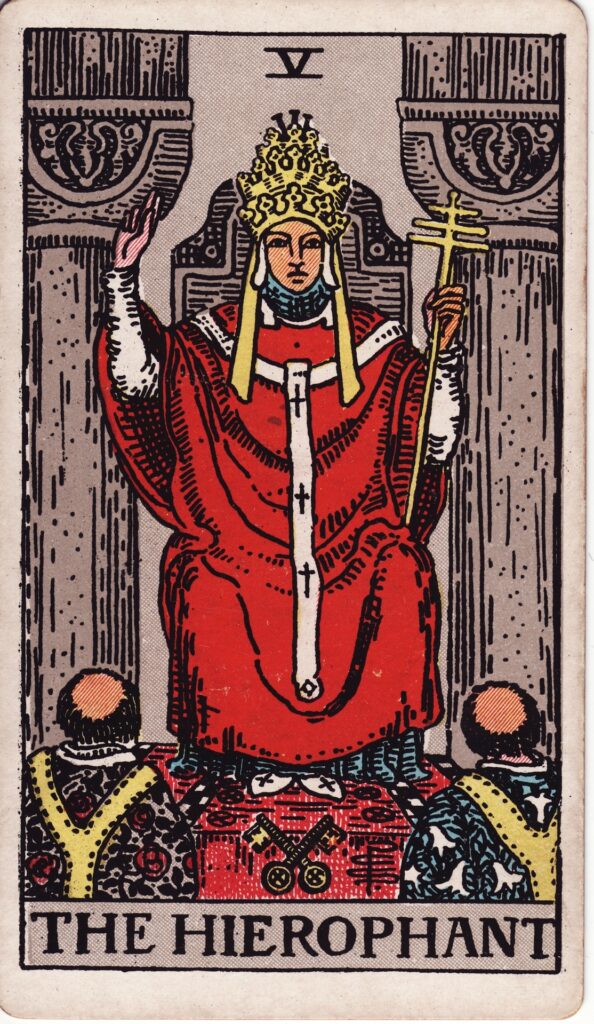
The Hierophant also known as The Pope in some decks is the fifth card of the Major Arcana. This profound card embodies tradition, conventional beliefs, and spiritual guidance. Serving as a bridge between divine and earthly realms, The Hierophant acts as teacher, mentor, and spiritual advisor. In readings, it often points to seeking wisdom through established channels, embracing traditional values, or finding connection within spiritual communities.
The card depicts a religious figure seated between two pillars, bearing symbols of spiritual authority. This imagery reinforces The Hierophant’s role as guardian of sacred knowledge and institutional wisdom. Whether upright or reversed, The Hierophant prompts us to explore our relationship with tradition, authority, and spiritual learning.
Traditional and Modern Symbolism
- Traditional Symbolism (Rider-Waite-Smith):
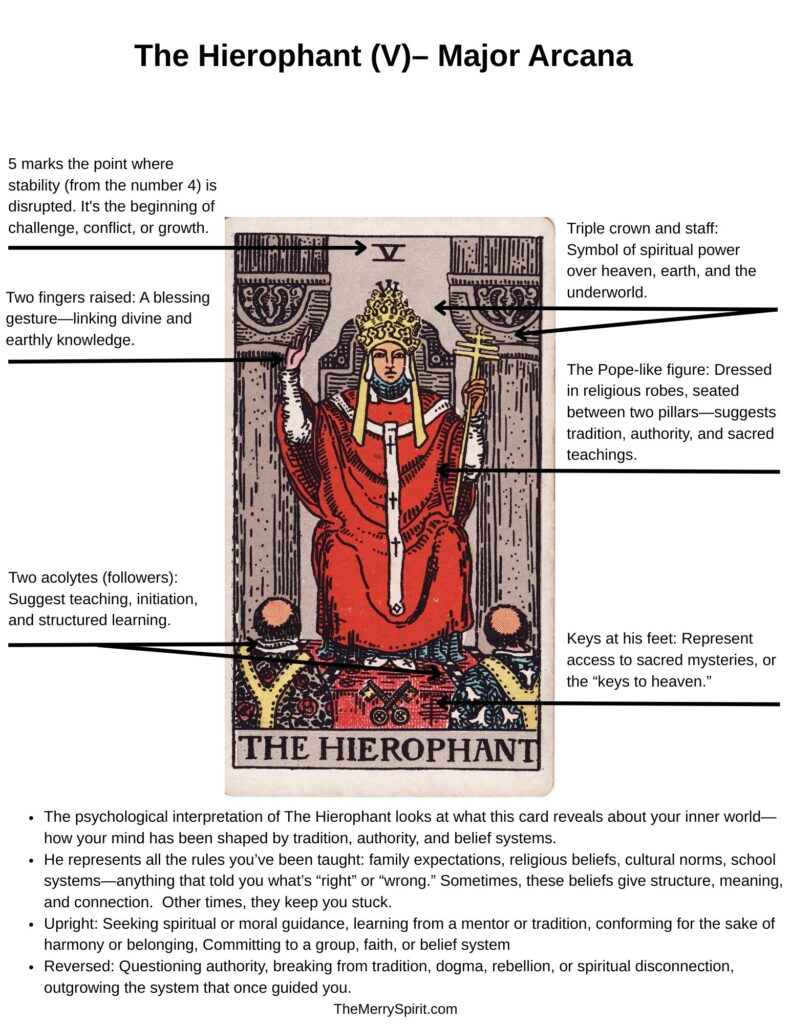
- The Hierophant is depicted as a spiritual teacher, sitting on a throne between two pillars, which represent duality (the merging of opposites). He holds a staff symbolizing spiritual authority and guidance.
- He wears a crown and crossed keys (often golden and silver), which represent unlocking secrets or opening doors to higher knowledge.
- The two acolytes seated before him represent the students, implying the Hierophant’s role in teaching and guiding.
- Modern Symbolism:
- Modern interpretations of The Hierophant can explore themes of spirituality, teaching, tradition, and rituals. Some decks depict him more as a mentor, counselor, or guide, moving away from a purely religious or dogmatic figure.
- In more contemporary decks, The Hierophant may also reflect a unifying figure who helps others connect to their own spirituality without strictly adhering to traditional structures or institutions.
Historical Evolution of Imagery
- 15th Century (Visconti-Sforza Tarot): The Hierophant, in early decks, was depicted as a religious or papal figure, maintaining a clear connection to church authority. His symbolism was strongly linked to religious hierarchy.
- 16th Century (Marseille Tarot): In these decks, the figure of The Hierophant was simplified, focusing more on his role as a spiritual leader rather than a purely religious one. He still represented tradition but less overtly associated with Catholicism.
- 20th Century (Rider-Waite-Smith): In this deck, The Hierophant gained a more universal representation, as a figure of higher knowledge and wisdom who could guide others. The traditional religious figure was maintained, but he also became a symbol for higher learning and spiritual growth beyond institutional religion.
- Modern Decks: Today, The Hierophant is sometimes depicted as a mentor, a teacher, or a figure of ritual not necessarily tied to a specific religion, but representing tradition, education, and spiritual guidance.
Upright and Reversed Meanings
- Upright Meaning:
- Seek (Spiritual) Guidance: The Hierophant often suggests that it’s a good time to seek guidance or mentorship from a trusted authority, a spiritual teacher, coach, or even an elder. It’s a reminder to respect the wisdom of those who have come before you.
- Tradition and Conformity: The Hierophant suggests following established traditions or rituals that offer a sense of security and structure may be beneficial. It can be a call to honor cultural, religious, or institutional norms that align with your personal values. There’s value in honoring rituals and customs that provide order and meaning in your life.
- Community and Belonging: The Hierophant suggests a desire for or that you might find comfort or meaning by becoming a part of a community that shares your values. It could indicate that it’s time to join a group, whether it’s religious, spiritual, or an organization with a cause that aligns with your ideals.
- Higher Learning and Wisdom: The card often symbolizes formal education, study, or wisdom. It may indicate the need to explore a spiritual path, consult a spiritual teacher, or dedicate yourself to learning.
- Spiritual Development: This card suggests that your spiritual development could benefit from committing to a course of study or spiritual discipline. It’s time to deepen your knowledge, whether through books, meditation, or formal classes.
- Reversed Meaning:
- Question Tradition: The reversed Hierophant suggests it’s time to question or even reject traditional beliefs and practices that no longer serve you. This could mean breaking free from dogmatic thinking or outdated systems that hold you back. The reversed card may also warn against over-reliance on rigid rules and dogma, indicating you might be following tradition blindly without examination. Additionally, it can signal stagnation in your spiritual or intellectual growth, suggesting the need for innovation and fresh approaches.
- Spiritual Disconnect: This card may indicate a period of spiritual crisis or disconnection. You might feel distant from your faith, tradition, or community, and The Hierophant reversed suggests either reconnecting or finding new ways to nourish your spirituality. When reversed, it can signify feeling cut off from your spiritual community or becoming disillusioned with a particular belief system.
- Innovation in Learning: The reversed Hierophant suggests that traditional learning methods might not suit you. Instead, seek wisdom through creative and alternative approaches whether through self-study, life experience, or unconventional teachers. This reversed position points to learning outside formal institutions and finding alternative sources of wisdom that align with your unique path.
- Nonconformity and Rebellion: Reversed, The Hierophant represents a break from tradition and conventional beliefs. It encourages you to question authority, break free from societal expectations, and create your own path.
Psychological and Spiritual Significance
- Psychological Significance:
- Authority and Structure: Psychologically, The Hierophant represents the desire for security through structure, order, and tradition. He represents the role that authority figures (parents, mentors, institutions) have in shaping our worldview and values.
- Internal Conflict with Authority: The card can also reflect inner conflict between following conventional wisdom and embracing independent thought. This can manifest as a struggle between the influence of traditional belief systems and the desire for personal freedom.
- Seeking Meaning: The Hierophant may symbolize an inner need to seek meaning in life through structured learning or spiritual practices. This could mean a desire to connect with a sense of purpose, find guidance, or understand the greater truths in life.
- Spiritual Significance:
- Connection to Higher Knowledge: Spiritually, The Hierophant represents the connection to a higher plane of wisdom whether through religion, spirituality, or philosophy. He is the mediator between the divine and earthly realms, guiding you toward a deeper connection with your higher self.
- Tradition and Ritual: This card often calls you to honor and learn from tradition, and it may suggest that ritual, ceremony, or formal teachings are important for your spiritual path. It can represent the importance of adhering to time-tested spiritual practices.
- Learning and Growth: The Hierophant signals that it’s time to deepen your spiritual knowledge, whether through formal study or guidance from a trusted teacher. The card suggests that growth comes through discipline and dedication to spiritual learning.
Key Takeaways:
- The Hierophant symbolizes spiritual guidance, tradition, and higher knowledge. It represents the need for structure and the teachings of spiritual or religious authorities.
- Upright, it signifies the importance of following tradition and seeking mentorship, while reversed it points to questioning authority, nonconformity, and embracing unconventional wisdom.
- Psychologically, the card reflects the need for security through structure, but also the inner conflict between traditional beliefs and independent thought.
- Spiritually, The Hierophant calls for learning and connection to higher wisdom whether through formal institutions or personal practice.
- Earth
- Taurus
- Maybe
Exploring the World of The Tarot: A Blog Series
Table of Contents
- The table of contents will be updated as new blog posts are published. If something is not linked it hasn’t been written yet.

The perfect tarot deck for the beginner.


